Government grants for EV Owners

Having a charger installed at home can make owning an electric vehicle much more convenient, but it also adds to the initial cost of going electric. Government grants can help make installation more affordable for eligible EV owners. In this guide, we’ll explain which home charger grants are available, who can apply and how much support you could receive.
This guide explains what the EV chargepoint grant actually covers, who currently qualifies and how the application process works, so you can find out where you stand before you start getting quotes.

What is the EV chargepoint grant?
The EV chargepoint grant is financial support from the government that helps cover the cost of installing a home charger for an electric vehicle. It doesn't pay for the whole thing. Instead, it reduces the amount you'd otherwise pay out of pocket.
The scheme has changed shape a few times since it was introduced. It replaced earlier, broader schemes such as the Electric Vehicle Homecharge Scheme, and today it's far more targeted. That's the main reason eligibility can feel confusing: the rules that applied a few years ago simply don't apply now. Understanding who the current grants are aimed at is the first step to knowing whether you can claim.
Who can apply for an EV charger grant in the UK?
Eligibility depends largely on your living situation and where you park, not just whether you own an electric car. Here's how it breaks down.
Homeowners with a driveway
If you own your home and already have off street parking, you're unlikely to qualify for the main home charging grant. Since 2022, homeowners with private driveways have been excluded from this particular scheme, even though this was the group it originally supported. It's a common source of disappointment, so it's worth knowing early rather than after getting a quote.
If you're in this position, don't rule out support altogether. There's a separate route (covered below) if you don't have a driveway at all.
Renters and flat owners
This is where most current grant support sits. If you rent your home or own a flat, and you have private off street parking, you can usually apply for the EV chargepoint grant for renters and flat owners. This covers up to £500 towards the cost of installing a chargepoint, whichever is lower once installer costs are factored in.
Flats are often surprised to learn they qualify, since many assume grants are aimed at homeowners. If you fall into this category, it's genuinely worth checking before you pay for installation in full.
Landlords and property managers
Landlords, including private landlords, property management companies and registered providers of social housing, can apply for chargepoint grants on behalf of a rental property. This covers up to £500 per socket, with support available for multiple sockets across a portfolio.
For landlords, this isn't just a cost saving. As more tenants drive electric vehicles, having charging already installed can make a property considerably more appealing.
What does the EV charger grant cover?
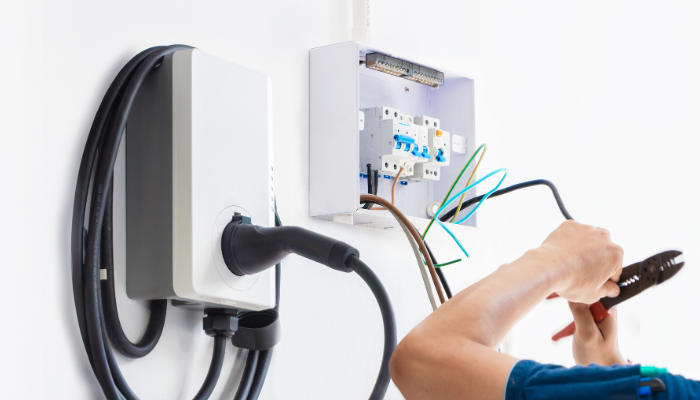
The grant contributes towards two main costs:
- The chargepoint unit itself
- Standard installation, including labour and necessary wiring
It won't necessarily cover everything, though. If your property needs additional electrical work, such as an upgraded fuse board or a longer cable run than usual, those extra costs typically fall outside the grant and would need to be paid separately.
How much can you get from an EV charging grant?
As of April 2026, most home charging grants offer up to £500 towards the cost of buying and installing a chargepoint. This applies to the renters and flat owners scheme, the on street parking scheme, and the landlord grant.
It's a contribution, not a full refund. If your installation costs more than the grant amount, and it very often will, you'll still need to cover the difference. Getting a clear quote from your installer before applying gives you a realistic idea of what you'll actually pay.
How to apply for an EV chargepoint grant
The process is more straightforward than people expect, mainly because you don't handle the paperwork yourself.
- Choose an OZEV approved installer. Only installers registered with the Office for Zero Emission Vehicles can process a grant claim. Using anyone else means you won't be eligible, regardless of how suitable your property is.
- Your installer applies on your behalf. Once you've agreed to go ahead, your installer submits the grant application as part of the process.
- The grant is applied at the point of installation. You won't need to claim money back afterwards. The discount is deducted from your final price.
Because the installer handles the application, most of the responsibility on your side comes down to checking eligibility and choosing the right installer in the first place.
Requirements for home charger installation
Even within an eligible group, a few practical requirements determine whether installation can actually go ahead.
Off street parking requirements
For most home charging grants, you'll need private, off street parking that you have a legal right to use, such as a driveway, allocated parking space or private car park. This is one of the biggest limiting factors for applicants, particularly for those living in flats or shared buildings without designated parking.
If you only have on street parking, you're not automatically excluded. A separate grant exists specifically for households in this position (see below).
Approved installers and equipment
Only chargepoints on the OZEV authorised list qualify for grant funding, and only installers registered with OZEV can carry out the work. This does narrow your options compared to choosing any charger and any electrician, so it's worth checking the approved list before you start comparing quotes.
Property eligibility criteria
Beyond parking, your eligibility depends on things like whether you own or rent, whether the property is residential, and whether you've claimed under an earlier version of the scheme before. If you've already received funding through a predecessor scheme such as the Electric Vehicle Homecharge Scheme, you generally can't claim again under the current one.
Other EV charging grants available in the UK
The main home charging grant isn't the only support on offer. Depending on your situation, you might also come across:
- The on street parking grant. For households without a driveway who are installing a cross pavement charging solution, such as a cable channel that routes safely under the pavement. This also offers up to £500 towards installation costs.
- The Workplace Charging Scheme. Aimed at businesses, charities and public sector organisations, offering up to £500 per socket for up to 40 sockets across their sites.
- Local authority initiatives. Some councils run their own charging infrastructure schemes, particularly for on street charging in areas without private parking. Availability varies significantly by area.
Can you get a free electric car charger at home?
Not usually, no. Grants reduce the cost of installation, sometimes significantly, but a fully free charger is rare. The £500 contribution covers part of the cost, and you'll typically still pay the remainder yourself.
Occasionally, specific offers or partnerships between energy suppliers and installers include free or heavily discounted charging equipment, but these tend to come with conditions, such as signing up to a particular tariff. It's worth reading the small print carefully if you come across an offer that sounds like it removes the cost entirely.
Common reasons applications are rejected
A grant application can fall through for reasons that have nothing to do with owning an electric car. The most common include:
- Not meeting the property criteria, such as being a homeowner with a driveway applying for the renters and flat owners grant
- Using a non approved installer, which disqualifies the claim regardless of eligibility elsewhere
- Missing off street parking requirements, where the parking space isn't private, isn't clearly defined, or isn't legally available to the applicant
- Having claimed previously under an earlier version of the scheme
Checking these before you get a quote can save a fair amount of wasted time.
Frequently Asked Questions (FAQs)
Who qualifies for the EV chargepoint grant?
Renters and flat owners with private off street parking, landlords installing chargepoints at rental properties, and households with only on street parking installing a cross pavement solution. Homeowners with an existing driveway are generally not eligible.
How much is the EV charger grant in the UK?
Most current schemes offer up to £500 towards the cost of buying and installing a chargepoint, covering a percentage of the total cost up to that cap.
Can renters apply for EV charging grants?
Yes. Renters with private off street parking are one of the main groups the current grant is aimed at, alongside flat owners.
Do you need off street parking for an EV charger grant?
For most schemes, yes. However, a separate grant exists for households with only on street parking, provided the installation includes a cross pavement charging solution.
Can you apply for more than one EV charger grant?
Generally, no. If you've already received funding through the current scheme or an earlier version of it, such as the Electric Vehicle Homecharge Scheme, you typically can't claim again.
Summary: EV charging grants explained
Support is available for home EV charging, but it's targeted rather than universal. Whether you qualify comes down largely to your living situation, your parking setup and which scheme applies to you. Checking eligibility properly before requesting quotes, and making sure you use an approved installer throughout, is the best way to avoid wasted time and unexpected costs.